
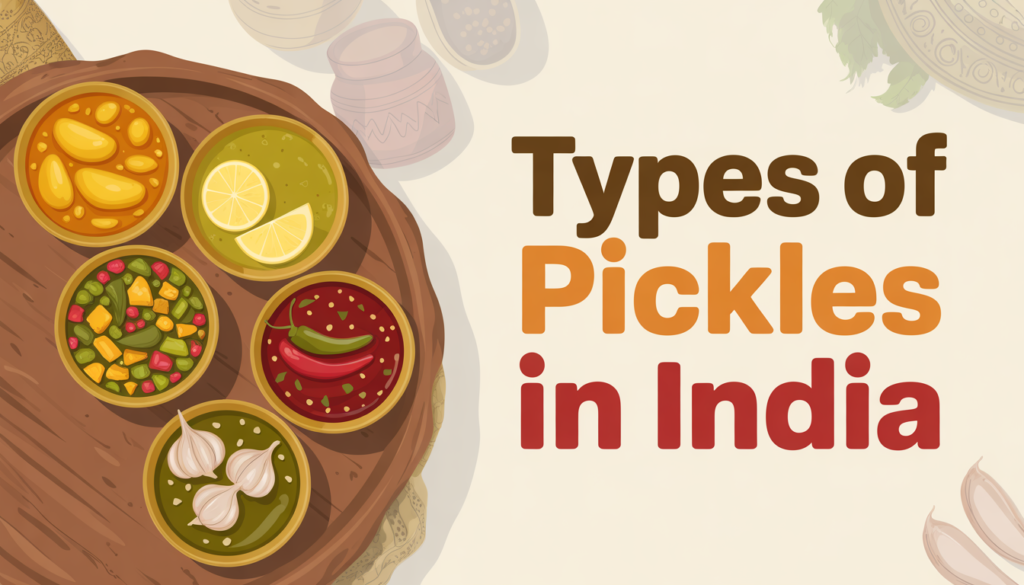
There’s something deeply comforting about the sight of a pickle jar sitting on an Indian dining table. That familiar pop of the lid, the burst of tangy-spicy aroma, and the first bite that transforms a simple meal into something memorable—this is the magic of Indian achar.
Every Indian household has its own pickle story. Maybe it’s your grandmother’s secret mango recipe passed down through generations, or that jar of lemon pickle your mother makes every summer. Pickles aren’t just condiments in India; they’re carriers of tradition, regional pride, and family love.
But have you ever wondered just how many types of pickles in India exist? From the tangy streets of Andhra Pradesh to the robust kitchens of Punjab, India’s pickle tradition is as diverse as the country itself.
In this complete guide, we’ll take you through the most beloved indian pickle varieties, explore regional styles, and help you understand what makes each achar special. Whether you’re a pickle enthusiast or just curious about traditional indian pickles, this journey through India’s pickle landscape promises to be deliciously enlightening.
1. Mango Pickle – The King of Indian Achar
When you think of Indian pickles, chances are mango pickle is the first one that comes to mind. And for good reason—this is the undisputed king of popular pickles in india.
Made from raw, green mangoes, this pickle captures the essence of Indian summers. The tartness of unripe mango combined with mustard oil, fenugreek, fennel, and red chilli creates a flavour profile that’s simultaneously sour, spicy, and slightly bitter—in the most delightful way possible.
Regional Variations:
- North Indian style: Often uses mustard oil and whole spices, with chunks of mango
- South Indian style: Features curry leaves, asafoetida, and sometimes jaggery for balance
- Andhra style: Known for its fiery heat and use of generous amounts of red chilli powder
Mango pickle pairs beautifully with rice and dal, parathas, or even simple curd rice. It’s the versatile companion that elevates any meal from ordinary to extraordinary.
2. Lemon Pickle – Tangy and Digestive Favourite
If mango pickle is the king, lemon pickle is surely the queen—elegant, sharp, and incredibly versatile.
This pickle is a masterclass in simplicity. Fresh lemons are cut, salted, and mixed with spices like turmeric, red chilli, and sometimes a hint of jaggery. The citrus oils from the lemon rind infuse the pickle with an intense, tangy flavour that’s both refreshing and appetite-inducing.
What makes lemon pickle special:
- Quick to mature compared to other pickles
- The entire lemon is edible, including the rind
- Creates a beautiful golden-yellow colour over time
- Traditionally believed to aid digestion when consumed in moderation
Lemon pickle is particularly popular in South India, where it’s often enjoyed with curd rice, dosas, or even as a side to biryani. The tangy punch cuts through rich, oily foods perfectly.
3. Garlic Pickle – Bold and Spicy
For those who like their pickles with personality, garlic pickle delivers bold, unapologetic flavour.
This different types of achar uses fresh garlic cloves preserved in a spicy, tangy marinade of vinegar or lemon juice, red chillies, and aromatic spices. The result is a pickle that’s pungent, fiery, and deeply satisfying.
Flavour profile:
- Strong, distinctive garlic taste
- Sharp and spicy
- Slightly sweet if jaggery is added
- Develops deeper flavour with age
While garlic pickle is loved across India, it’s particularly cherished in regions where robust flavours are celebrated. It pairs wonderfully with dal-chawal, parathas, and even as a spicy addition to sandwiches.
4. Red Chilli Pickle – For Spice Lovers
If you’re the kind of person who adds extra chilli to everything, red chilli pickle is your soulmate in the pickle world.
Made from long, tender green chillies (which turn red during pickling) or dried red chillies, this pickle is not for the faint-hearted. The chillies are slit and stuffed with a spice mixture of fennel, nigella seeds, mustard, and salt, then preserved in mustard oil.
Why chilli pickle lovers swear by it:
- Pure, unadulterated heat
- Complex flavour from the spice blend
- Small amount goes a long way
- Adds excitement to simple meals
In Rajasthan and parts of North India, red chilli pickle is a staple. Just a tiny piece alongside your meal provides that fiery kick that spice enthusiasts crave. It’s particularly popular during winter months when the heat feels warming rather than overwhelming.
5. Mixed Vegetable Pickle – The Balanced Choice
For those who can’t choose just one vegetable, mixed vegetable pickle offers the best of many worlds.
This traditional indian pickle typically includes carrots, cauliflower, turnips, green chillies, lemon, and sometimes raw mangoes—all cut into bite-sized pieces and preserved together. Each vegetable brings its own texture and flavour, creating a pickle that’s complex, interesting, and never boring.
What makes mixed pickle special:
- Variety of textures in every bite
- Balanced flavour profile
- Visually appealing with different colours
- Great way to preserve seasonal vegetables
Mixed vegetable pickle is like a celebration in a jar. It’s especially popular during winter when these vegetables are abundant. The combination works beautifully because each vegetable absorbs the spices differently, creating layers of flavour.
Regional Pickle Varieties Across India
India’s pickle tradition is as diverse as its culture, with each region adding its own unique twist to this preserved art form.
Andhra Style – The Fire Masters
Andhra Pradesh is famous for its fiery, oil-rich pickles. Here, types of pickles in india take heat seriously. Avakaya (mango pickle), gongura (sorrel leaves) pickle, and tomato pickle are regional favourites. The generous use of red chilli powder and sesame oil creates pickles that are intensely flavoured and gloriously spicy.
The Andhra approach is bold—more oil, more chilli, more flavour. These pickles are designed to be eaten in small quantities but pack an unforgettable punch.
Punjabi Style – Rich and Robust
Punjab’s pickle tradition reflects its hearty food culture. Punjabi pickles often use mustard oil liberally, creating rich, warming flavours. Gobi (cauliflower) pickle, gajar (carrot) pickle, and the famous achari mirch (pickled chillies) are staples.
What sets Punjabi pickles apart is the use of whole spices and a generous hand with oil, which acts as a preservative and flavour carrier. These pickles are perfect companions to makki di roti and sarson da saag.
Rajasthani Style – Desert Preservation
In the arid landscape of Rajasthan, pickling isn’t just about taste—it’s about survival. Rajasthani pickles are designed to last through harsh summers without refrigeration.
Ker sangri (desert beans and berries), dried chilli pickle, and raw mango pickle are made with minimal water content and maximum oil and salt. The preservation techniques perfected here over centuries are a testament to ingenuity.
South Indian Style – Subtle and Sophisticated
South Indian pickles often feature curry leaves, asafoetida, and sesame oil. The flavour profile tends to be more balanced, with sourness and spice working in harmony rather than competing.
Lime pickle, mango pickle with jaggery, and even non-vegetarian pickles like prawn pickle (in coastal areas) showcase the region’s diverse palate. The use of tamarind and dried red chillies adds depth without overwhelming heat.
How to Choose the Right Pickle for Your Meals
With so many popular pickles in india, how do you choose the right one? Here’s a simple guide:
For everyday meals (dal-chawal): Mango or lemon pickle provides the perfect tangy contrast to simple, comforting food.
For rich, oily dishes (parathas, puris): Lemon or chilli pickle cuts through the richness with sharp, cleansing flavours.
For bland or mild foods (khichdi, curd rice): Any robust pickle like mango, mixed vegetable, or garlic adds excitement and depth.
For special occasions: Mixed vegetable pickle looks impressive and offers variety that pleases different palates.
For spice lovers: Red chilli or garlic pickle delivers that fiery kick you crave.
The beauty of Indian pickles is that there’s no wrong choice—only different experiences waiting to be savoured.
Conclusion
The types of pickles in india reflect our country’s incredible diversity, regional pride, and culinary creativity. From the tangy lemon pickles of the South to the fiery Andhra specials, from the robust Punjabi preparations to the carefully preserved Rajasthani varieties—each pickle tells a story.
These traditional indian pickles are more than just condiments. They’re memories preserved in jars, traditions passed down through generations, and tiny bursts of flavour that transform everyday meals into something special.
At Auralin Hills, we understand this deep connection between pickles and tradition. Our carefully crafted pickles honour these time-tested recipes while bringing authentic flavours to your table. Each jar carries the promise of quality ingredients, traditional methods, and the kind of taste that reminds you of home.
Whether you’re rediscovering childhood favourites or exploring indian pickle varieties for the first time, there’s always a new flavour waiting to surprise you.
So tell us—which pickle is your all-time favourite? Are you team mango, or does lemon pickle hold a special place in your heart? Share your pickle stories with us!
7️⃣ FAQ SECTION
Q1: How many types of pickles are there in India?
India has countless pickle varieties, with every region and household having its own recipes. However, the most popular categories include mango, lemon, lime, garlic, chilli, mixed vegetable, ginger, cauliflower, carrot, and regional specialties like gongura, ker sangri, and amla pickles. Counting regional variations and family recipes, there are easily over 100 distinct types of pickles across India.
Q2: Which pickle is most popular in India?
Mango pickle (aam ka achar) is undoubtedly the most popular pickle in India. It’s prepared in almost every household during summer when raw mangoes are abundant. Different regions have their own versions—North Indian mango pickle uses mustard oil and whole spices, while South Indian versions often include curry leaves and jaggery. Lemon pickle comes in as a close second in terms of popularity.
Q3: What are traditional Indian pickles made of?
Traditional Indian pickles are made using fresh vegetables or fruits (like mango, lemon, chilli, or mixed vegetables), salt, spices (mustard seeds, fenugreek, fennel, turmeric, red chilli), and a preserving agent like mustard oil, sesame oil, or vinegar. The ingredients are mixed and left to mature in sunlight, allowing the flavours to develop naturally. No artificial preservatives are used in authentic traditional pickles.
Q4: Which pickle is best for daily meals?
For daily consumption, lemon pickle and mango pickle are excellent choices as they’re versatile and pair well with most Indian meals. Mixed vegetable pickle is also great because it offers variety and balanced flavours. These pickles complement simple dal-chawal, rotis, and even curd rice beautifully without overwhelming your palate. The key is choosing a pickle that enhances rather than dominates your meal.
Q5: What’s the difference between mango pickle and lemon pickle?
Mango pickle is made from raw, unripe mangoes and has a tangy, slightly bitter, and spicy flavour with a firmer texture. It’s typically chunky and deeply flavoured. Lemon pickle, on the other hand, is made from whole lemons (including the rind) and has a sharper, more citrusy tang with a softer, almost marmalade-like texture when mature. Mango pickle is bolder and more substantial, while lemon pickle is lighter and more refreshing. Both are preserved differently—mango pickle takes longer to mature than lemon pickle.